
Why the Best Luxury Villas Never Show Up in Your Search
Why the future of luxury travel belongs to the professionals who refuse to be automated.
There is a particular kind of disappointment that has become familiar to seasoned travellers. They arrive at the restaurant every feed promised them, the one framed by the same stone arch in the same honeyed afternoon light, and find it full of people holding up their phones to capture the image they came to reproduce. The place is real. The experience is not. It has been lived a thousand times before they set foot in it.
This is the quiet crisis at the heart of modern travel. For the professionals who curate journeys for the world’s most discerning clients, it is also the greatest opportunity in a generation.
The flattening of the world
For two decades, the recommendation engine promised abundance: more choice, more discovery, the whole world laid open. What it delivered instead was convergence. The algorithm does not reward the unusual. It rewards the popular, and in doing so makes the popular more popular still. The same villas rise to the top of every search. The same “hidden gems” appear on every list, a contradiction the machine is structurally incapable of noticing.
For the ordinary traveller, this is a minor irony. For the luxury travel professional, it is a strategic fault line. Your clients are not paying for what anyone could find in four taps. Whether they say so or not, they are paying for the unrecommended: the house that never trends, the village that has not yet been photographed into caricature, the experience that exists only because someone who knew arranged it.
Taste is not data

An algorithm can tell you which property is booked most often. It cannot tell you that a particular chalet has a west-facing terrace where the light in late September is worth rearranging an entire itinerary for. It cannot tell you that one owner will quietly open their cellar for the right guest, while another, equally beautiful on the page, runs their home at arm’s length through a management company that answers emails in three days. It does not know that the family arriving next month has had a difficult year and needs stillness, not a concierge who calls twice a day to check on their plans.
This is the distinction that matters most. Data describes what has already happened. Taste anticipates what ought to happen next. The first is a commodity, endlessly reproducible and therefore endlessly cheapened. The second is scarce, and scarcity, as everyone in this industry understands, is where value lives.
It is worth remembering, too, that the algorithm’s apparent taste is borrowed. Every recommendation is a reflection of millions of prior choices, most of them made by people with very different priorities from your clients. When a platform suggests a villa, it is not exercising judgement. It is reporting a consensus. For a client who has spent a lifetime deliberately stepping away from the consensus, that is precisely the wrong advice.
Curator, not conduit
There is a version of this profession that is simply a faster search bar: a person who passes along whatever the platform surfaces, wrapped in a courteous email. That role is already being automated, and it probably should be. The version that endures is the curator. This is the professional who has walked the property, met the owner, understood the client, and made a judgement that no aggregated dataset could have produced.
The distinction shapes everything, including the tools a professional chooses. A platform that ranks homes by popularity quietly turns you into a conduit, competing with every other agent and every booking site on the same shortlist. A platform built to surface character, provenance and the particular over the generic turns you into a curator, with access to what others cannot see. The difference is not cosmetic. It is the difference between competing with the algorithm and offering the one thing it cannot.

The new currency of trust
Something else is shifting beneath the surface. As AI-generated recommendations become ubiquitous, and as travellers learn that reviews can be manufactured and images improved beyond recognition, trust is migrating. It is moving away from platforms and back towards people. The most sophisticated clients are already asking a question that would have seemed old-fashioned a decade ago: who actually knows this place?
The professional who can answer that question with confidence, and with first-hand knowledge, holds an asset that grows more valuable as the digital landscape grows noisier. In an age of infinite information, a trusted voice is the rarest luxury of all.
Trusting the machine, on your own terms
None of this is an argument against technology. The algorithm is an extraordinary servant and a poor master. Used well, it clears away the administrative weight of the work, the availability checks, the rate comparisons, the logistics of a twelve-person family gathering across three villas, and frees the professional for the part that is irreducibly human: the noticing, the anticipating, the quiet arranging of things so that a client never sees the effort behind them.
The goal, then, is not to reject the machine’s efficiency but to refuse its taste. Let it handle the arithmetic. Keep the judgement for yourself.
Because in the end, the client who has seen everything is not looking for another recommendation. They are looking for someone who knows them, knows the world, and can bring the two together in a way no engine ever will. The algorithm has taste, of a kind. But it is the taste of the crowd, and your clients came to you precisely because they outgrew it long ago.

Where the unrecommended lives
This is the conviction on which Villa Tracker was built. Moriya Rockman, founder of Smiling House Group, has described travel professionals as “the invisible architects of luxury travel”, and the platform exists to put the unrecommended within their reach. Rather than ranking homes by what the crowd has already booked, it opens a curated collection of more than 25,000 luxury and ultra-luxury homes across 80 countries and 500+ destinations, from alpine chalets and Mediterranean villas to Caribbean estates and private islands, many of them the kind of whole-home, owner-cherished properties that never trend and never need to. A professional can move across regions with a multi-destination search, gather options into shortlists, and present their findings to clients through personalised proposals with a white-label PDF option, so the discovery remains theirs, under their own name. The machine does the gathering; the professional does the choosing. For clients who long ago outgrew the obvious, that is the difference between a holiday that has been lived a thousand times and one that feels as though it was waiting only for them.

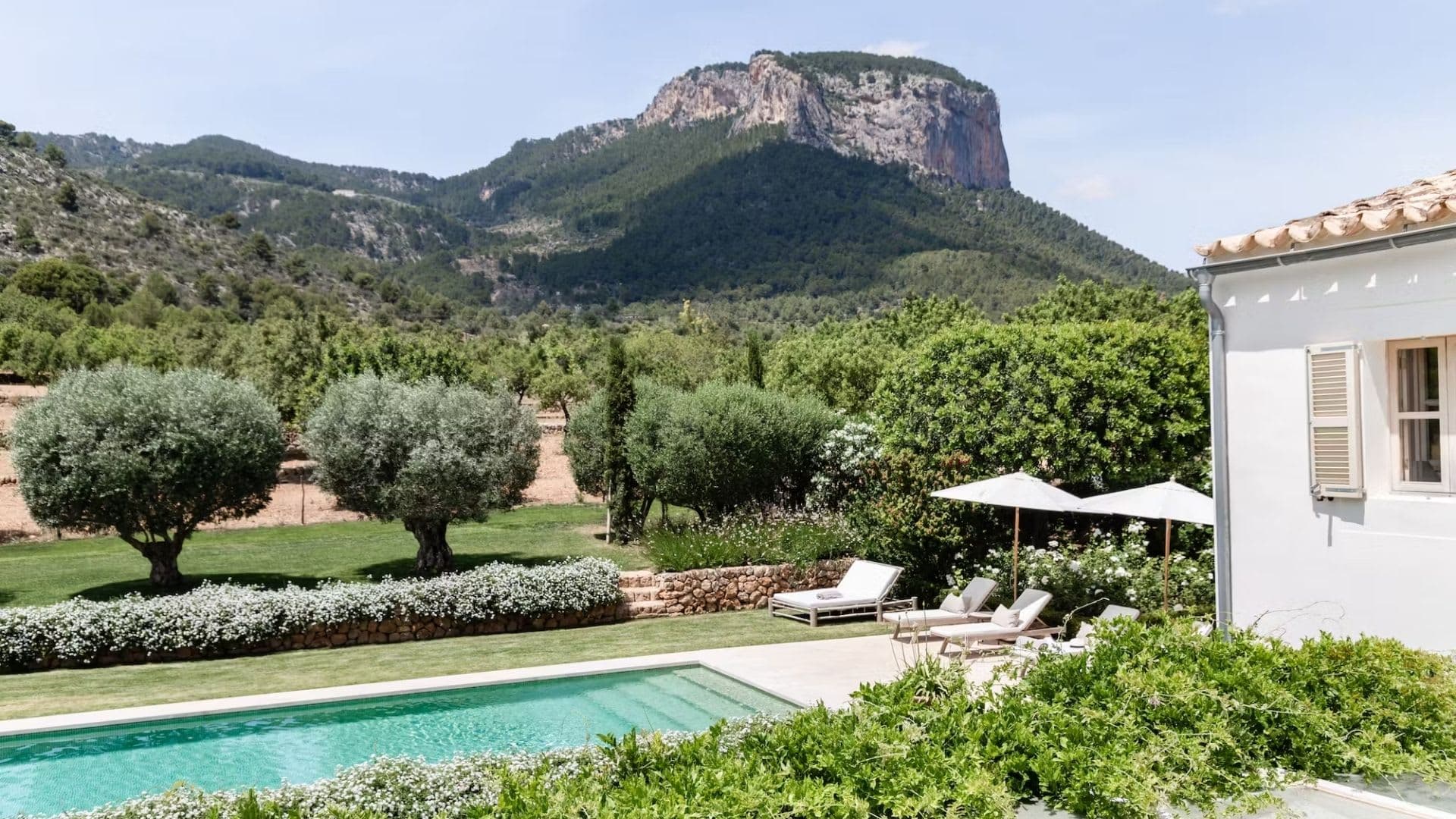
The pictures in this article are all from the curated luxury collection for travel professionals in Villa Tracker. Sign up today for free.