 BEYOND THE POWDER
By Moriya Rockman — Founder & CEO Villa Tracker
PIECE 1: FULL FEATURE ARTICLE
For trade publications, Skift, Condé Nast Traveller, luxury hospitality media
Beyond the Powder: How the Alps Are Reinventing Themselves — and Why It Matters
By Moriya Rockman, Founder & CEO, Smiling House | Triangle Luxury
This week, I handed over the keys.
Not once — dozens of times. Chalet after chalet in Gstaad, one of Switzerland’s most storied alpine villages, welcoming a new kind of guest. Not families arriving with ski boots and race suits. Not the winter regulars I have known for years. Something different entirely: music lovers. Young professionals. Couples in their forties who had never visited the valley before. Artists. Night owls. People who had come for the bass line, not the black runs.
They had come for Caprices.
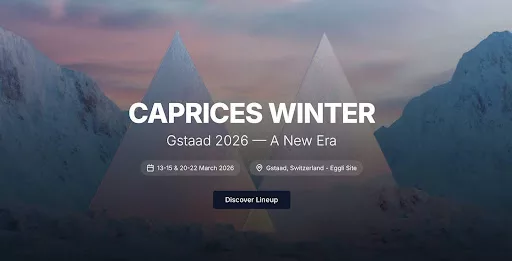
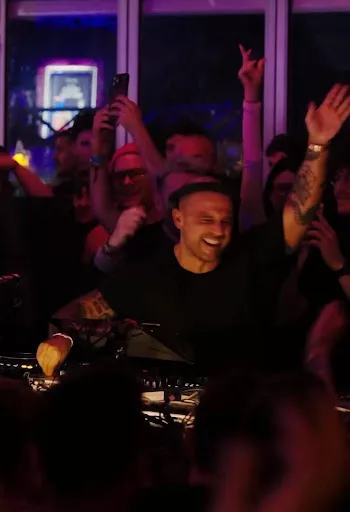
For those who don’t know it: Caprices Festival is one of Europe’s most respected electronic music events — a two-decade institution that began in 2003 in Crans-Montana, born from the wild idea of holding a sunrise afterparty at 2,200 metres up the Alps. What started with Ricardo Villalobos and a handful of devoted underground music followers grew, over twenty-three editions, into one of the most atmospheric and sought-after festivals in the world. Sven Väth. Ben Klock. Black Coffee. Jamie Jones. Bedouin. All of them, at altitude, with the Swiss Alps as the stage set.
And now, after more than two decades, Caprices has chosen a new home: Eggli, above Gstaad, with a 360-degree panorama of the peaks, a production infrastructure built into the mountain itself, and two full weekends each March dedicated to the finest electronic music on the planet.
What struck me as I handed those keys over this week was not just the joy of a full chalet — though that matters deeply, for our team, for our owners, for the village. What struck me was who was arriving, and what it meant. These guests had not come because of snow. They had come because of culture. Because of music. Because a destination they had perhaps never considered before was suddenly, powerfully, relevant to their lives.
That is the story I want to tell. Because it is not just a Gstaad story. It is happening everywhere across the Alps, across the Rockies, across every mountain destination that is brave enough to ask: what are we, beyond winter?
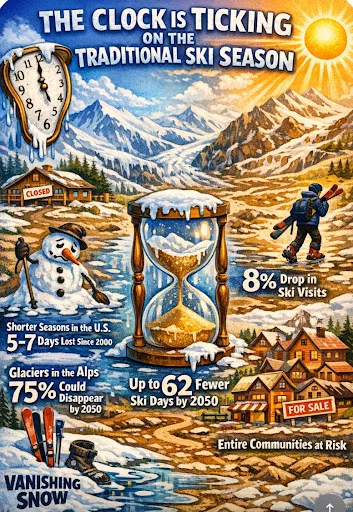
The data is no longer deniable. From 2000 to 2019, the average ski season in the United States shortened by five to seven days — a number expected to double, possibly triple, by 2050. In Europe, even with the use of artificial snow, the season could shrink by anywhere from 14 to 62 days within 25 years. Vail Resorts — one of North America’s most powerful ski conglomerates — reported an 8% decline in visits during the 2023–24 season, driven by a 28% annual drop in snowfall.
The number that concentrates the mind, however, is this: 75% of glaciers in the French Alps could disappear by 2050. That is not an abstraction. That is Chamonix. That is Tignes. That is places where some of the most extraordinary hospitality in the world has been built — quite literally — on ice.
For towns whose entire economies depend on ski tourism, declining snowfall doesn’t just hurt individual operators — it can capsize entire communities. A ski resort is never just a ski resort. It is the butcher, the ski school, the family hotel that has been there for four generations. When the season contracts, all of that contracts with it.
At Smiling House, we operate one of the most curated luxury accommodation platforms in the world — with a portfolio spanning 55 countries and one of the most exceptional ski property collections in the industry. Under our Gstaad Chalet brand, we manage a portfolio of private properties in the Saanenland valley, each one a home that carries the soul of the place.
What makes our perspective unusual is this: we are not observers of the alpine hospitality world. We are inside it, every single day, in direct and personal contact with every guest — listening, adapting, and responding in real time to how travel to mountain destinations is genuinely changing.
And what we are seeing is extraordinary.
In winter, our guests are largely what you might expect in a luxury ski chalet: active families, groups of friends organising private ski weeks, couples celebrating milestones in front of a fire after a long day on the mountain. The energy is physical, social, festive. The chalet is a base for sport and togetherness.
But something shifts in the shoulder season. And again in summer. The guests who come to Gstaad in September are not the same guests who came in February — and I mean that in the best possible way. They are quieter, more curious. They come for the hiking trails above the village, for the cycling routes through the Saanenland, for the wildflower meadows, for the festivals. And increasingly, they come because of events like Caprices — because someone told them that Gstaad between the seasons is one of the best-kept secrets in Switzerland, and they came to discover whether that was true.
It always is.
Caprices is the most vivid example I know personally — but it is far from alone. Across the Alps, mountain destinations are building extraordinary cultural calendars precisely to bridge the seasons and extend the life of their communities.
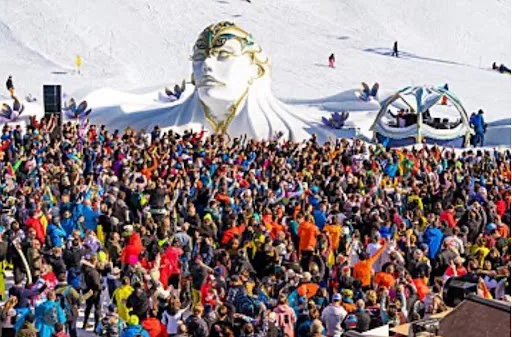
In France, Tomorrowland Winter in Alpe d’Huez brings hundreds of the world’s most celebrated electronic artists to mountainside stages each March. Rock the Pistes fills over 30 après-ski concert venues across the Portes du Soleil’s interconnected 650km ski network. At Les Arcs, a mountain cinema festival in its sixteenth edition fuses film with altitude, drawing an audience that travels for storytelling as much as for skiing. Val d’Arly has launched a street art festival that brings 40 artists and entirely new visitors into the Alpine environment — people who have never put on a ski boot, arriving in the mountains for the first time.
In Austria, Snowbombing in Mayrhofen has turned an entire alpine village into a week-long music destination, from forest venues to igloo clubs. In Switzerland, Zermatt Unplugged brings an intimate acoustic festival to the car-free village every April, with the Matterhorn as its backdrop.
Gstaad itself has long understood this better than almost anyone. The Menuhin Festival — one of Europe’s most distinguished classical music gatherings — has drawn the world’s finest musicians to the valley every summer for decades. The Gstaad Jazz Festival, the Hublot Polo Gold Cup, and now Caprices: the village’s cultural identity has never been reducible to skiing alone. That is precisely why it endures.
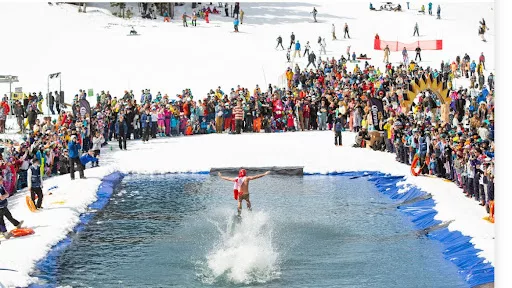
Nowhere is the shoulder-season strategy more sophisticated than in Whistler, Canada. Every April, the World Ski and Snowboard Festival brings together athletes, artists, and musicians for a full week of events — a 72-hour filmmaker showdown, a photography competition, a battle of the bands, on-slope competitions, and the legendary Slush Cup. It is described, accurately, as the ultimate après of the entire winter season.
In Jackson Hole, the Rendezvous Music Festival extends the season into spring, with a programme where all-time ski days flow seamlessly into evenings you won’t want to end — the venue accessible directly by ski. In Vail, the Taste of Vail culinary festival — now in its 35th year — brings renowned chefs and sommeliers together in early April for a programme that draws visitors who may never have worn a ski boot in their lives.
Across Colorado, WinterWonderGrass at Steamboat Springs pairs bluegrass, roots music, and craft beer from over 20 local breweries in a festival that feels organically of the place. At Telluride, the Blues & Brews festival draws tens of thousands every September. At Aspen, the summer music festival has been running for decades, drawing a visitor profile entirely distinct from the winter crowd.
The mountain is the setting. The season becomes irrelevant.
Behind every ski instructor, every mountain restaurant owner, every craftsman in an alpine village is a family whose livelihood has historically been compressed into a few fragile months of winter. As Diego Clara of Dolomiti Superski put it: “Almost everyone in our valleys depends on snow tourism — hotels, gastronomy, ski schools, rentals, shops — and the cold days of autumn are becoming fewer and also coming later.”
When a destination extends its season through culture, events, and outdoor programming, it is not a marketing exercise. It is an act of economic solidarity. It means the local guide works in May. It means the hotel keeps its staff year-round rather than laying them off in April. It means that children growing up in mountain communities can imagine a future that does not require them to leave.
The towns that understand this most clearly are reinventing themselves with confidence. Morzine, at 1,000 metres, now markets itself not as a ski resort but as a mountain destination, year-round, full stop. Gstaad has followed a similar logic for decades — maintaining its identity as a village, not a resort. A village has a life in every season.
From a hospitality perspective, I believe the shoulder season is the most undervalued opportunity in the luxury mountain travel market today.
Think about what the spring mountain offers: extraordinary light, softer slopes, warmer terraces, the first wildflowers pushing through the snowline, and an intimacy that disappears in peak-season crowds. Think about what late summer in the Alps gives: world-class hiking, cycling, alpine wellness, extraordinary local food, temperatures that increasingly rival the coast — and a quietness that the most sophisticated travellers are actively seeking.
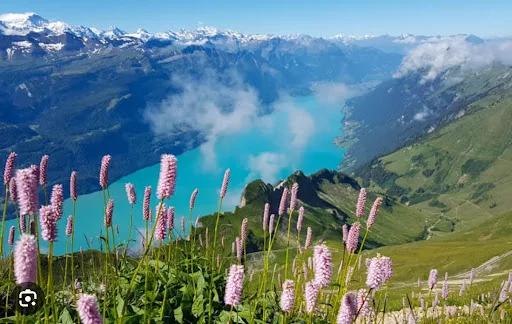
The guest who comes to Gstaad in September for Caprices is among the most rewarding I welcome. They arrive curious, open, without the fixed routines of a ski week. They discover the village at its most authentic. They eat in restaurants they would never have found on a ski holiday. They walk in the mountains without the pressure of a lift pass. They leave — and this I know from experience — as guests who will return, season after season, each time for a different dimension of the same extraordinary place.
At Smiling House, we are actively building the capability to serve these guests across every season: curating the event calendar, connecting the right property to the right cultural moment, ensuring that the chalet is not just a bed for the night but the lens through which a guest experiences a destination in its fullest depth.
The Alps did not become extraordinary because of ski lifts. They became extraordinary because of their silence, their scale, their communities, their particular quality of light. Skiing was the vehicle that brought the modern world to the mountain — but the mountain was always more than that vehicle.
Climate change is forcing a reckoning that, in some ways, was long overdue. The most resilient destinations are not those fighting hardest to preserve the old model. They are those with the imagination to see what the mountain can be across all twelve months — and the courage to invest in building it.
Music on glaciers. Comedy at altitude. Culinary weekends in stone villages. Art installations in the snow. Classical concerts in summer meadows. Polo in a valley ringed by peaks. Electronic music that makes the mountain pulse at 2,200 metres.
This week, I handed over the keys to a chalet full of people who had never been to Gstaad before. By the time they left, they understood — as all of us who live and work in these mountains understand — that this place is not a winter destination. It is a destination, full stop.
And the most compelling chapter of its story may be the one that is just beginning.